Do You Have Interest in Electrophoresis Tanks?
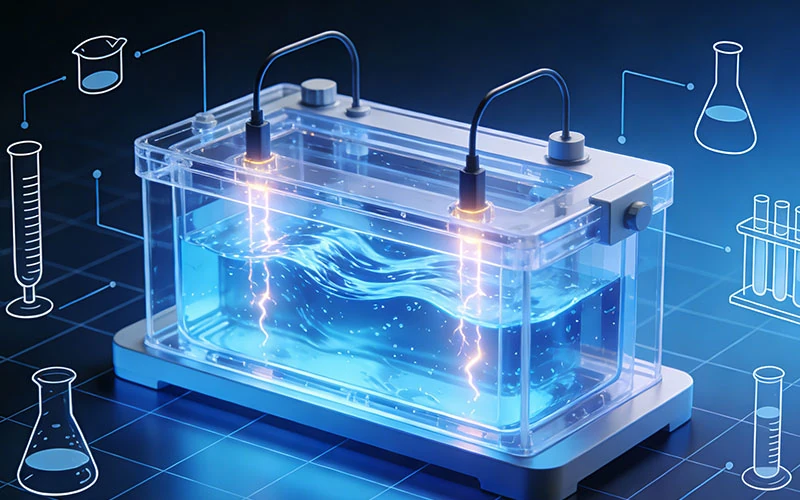
An electrophoresis tank is a core device used to hold electrophoresis buffer and samples in electrophoresis experiments. Its design and performance directly affect the accuracy and reproducibility

Key Takeaways
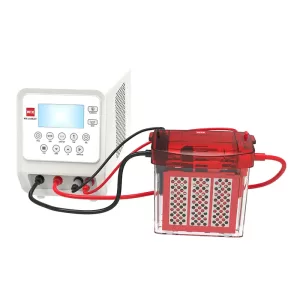
A gel rests in buffer between two electrodes. When you switch the unit on, charged molecules begin to move: proteins through polyacrylamide, DNA fragments through agarose. Both leave behind a pattern of bands. Most Electrophoresis Power Supplies let you hold one electrical value steady while the other two follow along.
Three numbers describe the chamber. Voltage is the push behind each molecule, current measures how much charge flows through the buffer, and power tells you how quickly energy turns into heat. You can picture three dials on one panel, although only one usually needs your hand.
Why does steadiness matter so much? Migration speed depends on the field, so a drifting push makes the front move unevenly. A researcher who runs the same gel on Monday and Thursday wants both images to look alike, even when the buffer warms up or a thicker gel resists the flow.
Many people treat the end of a run as a clean stop, yet molecules do not freeze in place. Once the field is gone, diffusion carries on, and a band slowly widens while the gel waits in buffer. Twenty extra minutes feel harmless during a busy afternoon; on the final image, the edges look softer and faint signals fade.
You can avoid much of this by planning the next step before you press start. If staining or transfer follows straight away, the sample has little idle time to spread. Some labs also keep a very small current flowing after the timer ends, which holds the bands close to where they finished. Both habits respect what the gel keeps doing after the display reaches zero.
The three output modes come first, because they shape almost everything else. Each one fixes a different value, and each suits a different kind of work.
| Output mode | The value you set | Where labs use it | What changes during a run |
| Constant voltage | Voltage in volts | Protein gels and agarose gels | Current climbs as the gel warms and resistance falls |
| Constant current | Current in milliamps | Electrotransfer and blotting, where a steady flow matters | Voltage adjusts to keep the flow unchanged |
| Constant power | Power in watts | Long runs and transfers where heat needs a ceiling | Voltage and current trade off to hold the total steady |
You normally set one value, and the instrument works out the other two. That sounds simple until conditions inside the chamber shift. Buffer conductivity changes with temperature, and a thick gel resists the flow more than a thin one. Unless the unit rebalances as this happens, the display may look steady while the real conditions do not. Researchers sometimes blame the sample for a faint band, when the field simply wandered.
With modern designs you can watch all three values at once. Choose constant voltage, for example, and the electronics keep current and power within safe bounds. Some units go further: they adjust the two unset values as conditions change, so you need not pause a run to correct them by hand. That means fewer interruptions and less time guessing which dial to touch.
Range comes next. A benchtop unit usually covers a few volts up to several hundred, with current in milliamps and power in watts. A wide range matters because one bench may cast a small agarose gel in the morning and run a protein gel after lunch. Check the smallest step too: fine steps let you repeat a method exactly, whereas coarse ones force you to round off.
Timing is just as practical. Most units accept anything from a single minute to many hours, which covers a quick check as well as an overnight transfer. People tend to overlook size and weight until bench space runs out; a compact case moves easily between rooms.
Protection deserves a quiet look too. Open circuits, short circuits, sudden load changes, and overloads all happen in busy labs. Leakage protection and an audible alarm give you a chance to react before a sample is lost, although these features rarely show up in a photograph.
Few labs dedicate one instrument to a single task. A typical week might open with SDS-PAGE Electrophoresis for a purification check and close with DNA Electrophoresis to confirm a PCR product. Both rely on the same idea, even though the gels, buffers, and staining steps differ.
These steps sit in one chain: separation, transfer, then detection. Because of that, the instrument driving the first step quietly shapes how convincing the final image looks. A slight drift early on can become a blurred band hours later, which is worth remembering when you choose the unit beside the gel tank.
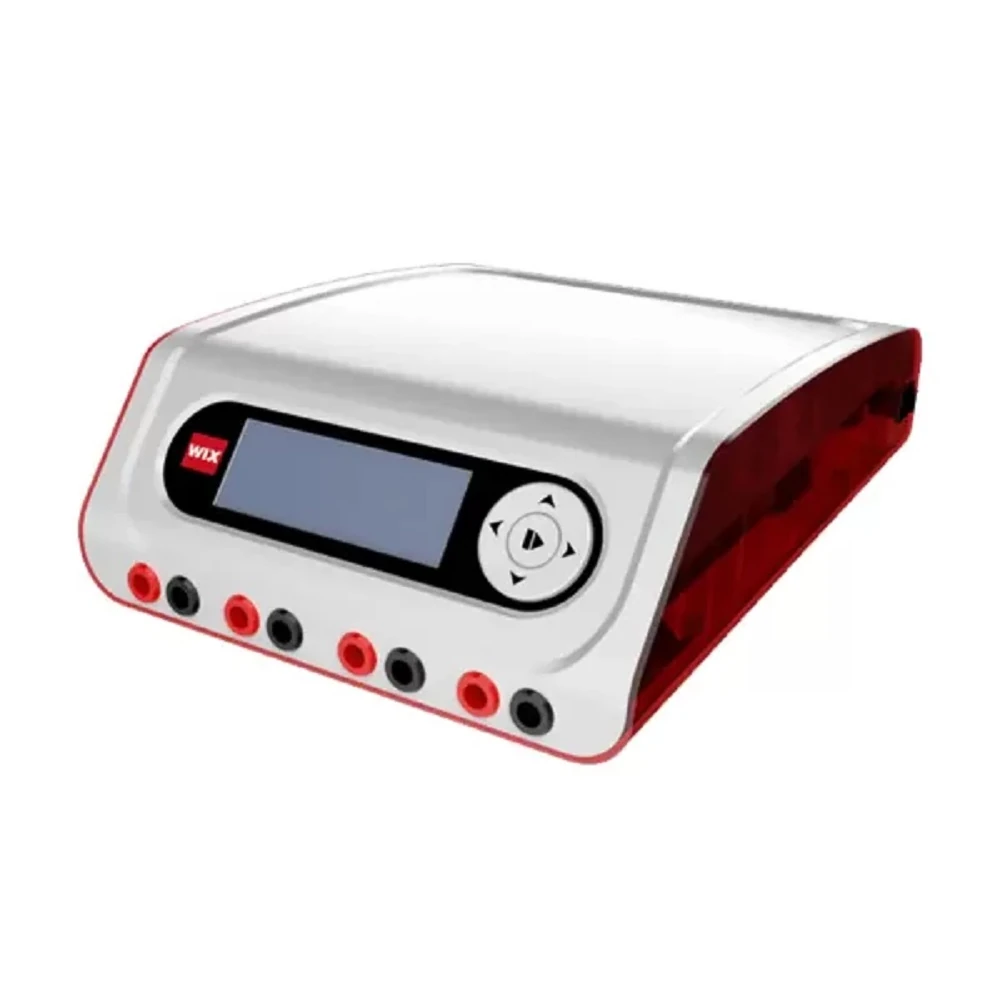
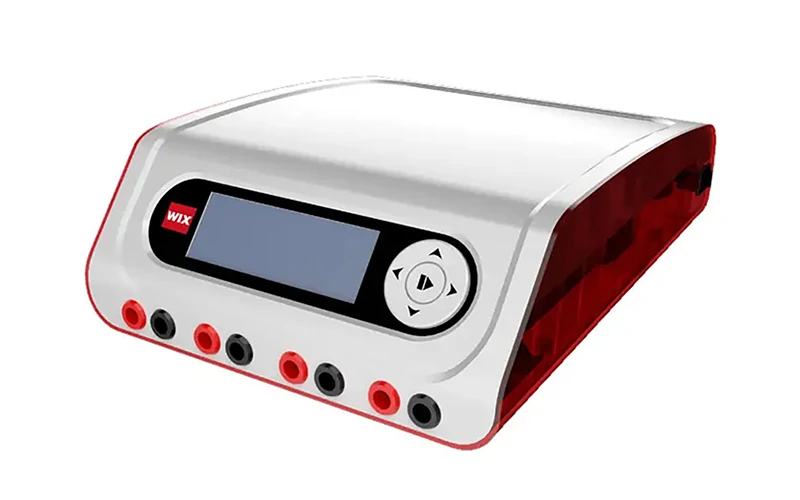
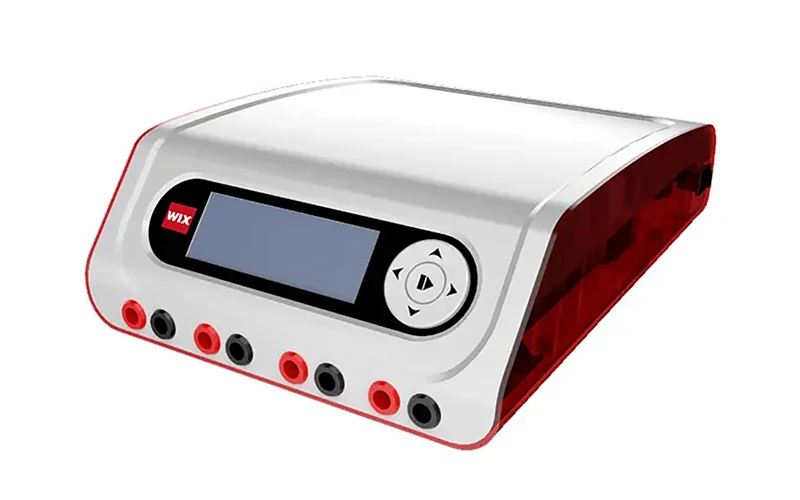
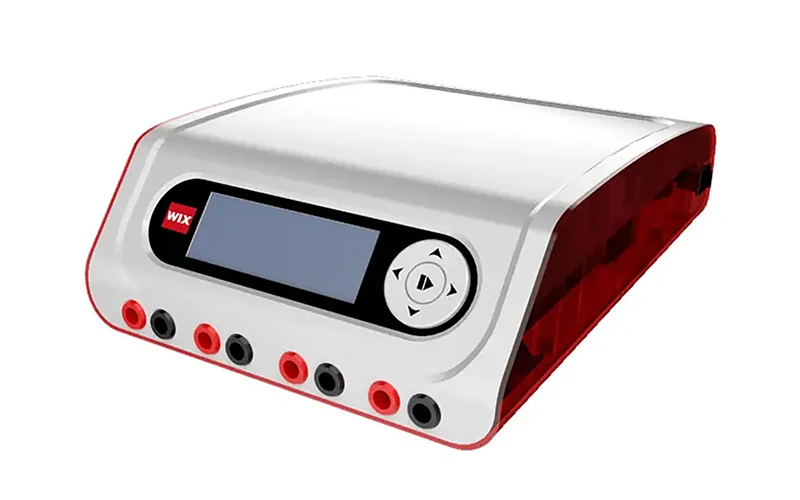
One instrument built for exactly this mix of work is the WIX-EP600 Universal Electrophoresis Power Supply. It brings the three output modes together with functions aimed at labs that run several methods in the same week.
With this unit you can choose constant voltage, constant current, or constant power. Set one of them as the constant value, and the other two are set automatically, which removes manual corrections and the false-constant values that can follow them. You can set voltage from 10 to 600 V, current from 1 to 1200 mA, and power from 1 to 500 W, in steps as fine as 1 V, 1 mA, or 1 W. The timer runs from 1 minute to 99 hours 59 minutes. At 300 × 240 × 100 mm and 2.5 kg, the case takes up little room on a crowded bench.
Its built-in functions speak directly to routine protein work. Under the protein function, you hold 80 V for 30 minutes while the sample moves through the spacer gel; the unit then switches on its own to 120 V for the separating gel, so nobody has to reset the method between steps. You can also store 20 programs, each with fewer than 10 steps, which helps when several people share one instrument. Up to four electrophoresis setups can be connected in parallel, handy for teaching sessions or sample batches. On the LCD you can read voltage, current, power, and remaining time at once, without cycling through screens. The unit carries CE certification (IT1440WX08111806) and ISO 9001 certification (53123QZ0615R0S).
On a busy bench, small faults can ruin samples before anyone notices. The WIX-EP600 watches for over-voltage, voltaic arcs, no load, sudden load changes, overload, and short circuits while a run is in progress. Leakage protection, a pause function, and an open circuit alarm sit alongside those checks, so a loose lead or a dry tank draws attention before the sample is lost.
One more function addresses a problem many labs notice only afterwards. Once electrophoresis finishes, the micro-current mode starts automatically. A small current holds the sample in place instead of letting it spread through the gel while the unit sits idle. That matters when you are staining another gel, answering a question, or walking back from a meeting. Bands stay sharper, and the instrument stops doing unnecessary work. A technician therefore has fewer things to watch during a long afternoon of runs.
Each mode holds a different value steady. Constant voltage keeps the push fixed, which suits most gel runs. Constant current keeps the flow fixed when you move proteins onto a membrane. Constant power caps total energy, so heat stays under control during a long transfer. In practice, constant voltage covers roughly 80% of routine work, constant current about 15%, and constant power close to 5%.
Molecules do not freeze the moment the field stops. Diffusion carries on, so a band widens slowly while the gel waits in buffer. The effect is easy to miss on a busy day, yet it can change how a result reads after imaging. Moving promptly to staining or transfer, or holding the samples with a very small current, keeps the pattern closer to what it looked like at the end of the run.
Yes, provided the method is written as two steps. You set a lower voltage for the stacking phase and a higher one for separation, then the unit changes over at the right moment. This is common in SDS-PAGE work, where 80 V and 120 V are familiar settings. It saves a manual reset and, more usefully, removes the risk of forgetting it altogether.
Start with the simple things: buffer age, gel thickness, and how long the gel sat before imaging. Then compare the three values you saw during the run with the ones you expected. If current climbed while voltage stayed fixed, heat may have been the cause. When a unit shows all three values together, that comparison takes seconds.
A power supply looks like a small box, although it decides how trustworthy a gel image will be. The three output modes, the range they cover, and the way a unit responds to changing conditions all leave their mark on the bands you finally compare. The minutes after a run ends belong to the same story, since diffusion does not wait for a convenient moment. Once you know what to watch, choosing an instrument becomes less about the largest number on a panel and more about how calmly it handles a normal working day. Labs that run proteins, nucleic acids, and downstream detection in the same week tend to value that steadiness most. Contact the WIX team to discuss the configuration that fits your lab’s daily workload.