
Do You Have Interest in Electrophoresis Tanks?
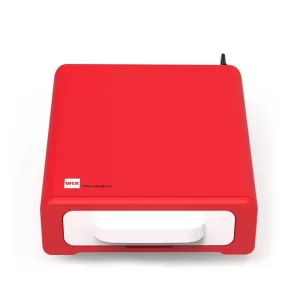
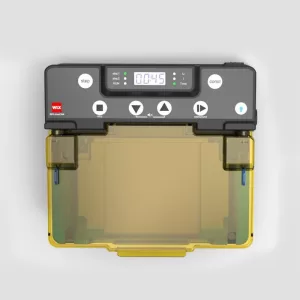
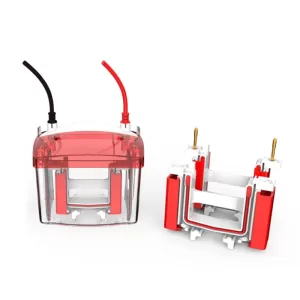
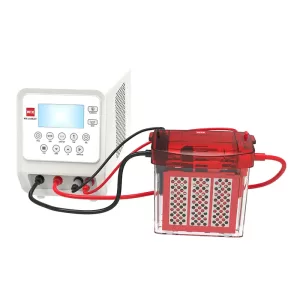
An electrophoresis tank is a core device used to hold electrophoresis buffer and samples in electrophoresis experiments. Its design and performance directly affect the accuracy and reproducibility

A laboratory shaker supports procedures that require controlled movement of liquids, membranes, gels, and other samples. However, different experiments need different movement patterns. Equipment designed for horizontal circular motion does not necessarily provide the same action as equipment that tilts in multiple directions.
Selecting the wrong motion type or platform configuration can lead to poor sample contact, unstable containers, or an unsuitable workflow. Procurement teams should therefore compare the experimental method, operating requirements, load capacity, and vessel compatibility before evaluating individual models.
The experimental procedure should determine the motion type. Start with the movement specified in the protocol rather than choosing equipment based only on the sample name.
Laboratory equipment generally uses several movement patterns. Each creates a different liquid-flow condition and suits particular procedures.
| Motion type | Platform movement | Typical applications |
| Orbital | Moves in a horizontal circular path | Mixing liquid cultures and solutions |
| Linear or reciprocating | Moves back and forth horizontally | Extraction, dissolving, and repeated horizontal agitation |
| Rocking or tilting | Alternates between raised and lowered sides | Gentle mixing in trays, flasks, and culture vessels |
| 3D | Combines tilting movements in multiple directions | Membrane washing, gel staining, and procedures requiring multidirectional movement |
Use the protocol as the deciding reference. If it specifies orbital agitation, select an orbital unit. If it requires repeated horizontal movement, a linear or reciprocating type is more appropriate. A rocking model suits procedures that need a gentle see-saw action. Consider a 3D model when the method calls for multidirectional tilting rather than a fixed horizontal path.
These categories are not interchangeable. The IKA shaker selection guide also distinguishes reciprocating, 2D rocking, and 3D tumbling motions by their movement and typical applications.
A 3D motion can be useful when samples need gentle movement from changing directions instead of a single horizontal path. Common examples include Western blot membrane washing, antibody incubation, and gel staining or destaining.
For Western blot washing, the membrane should remain covered by buffer throughout the cycle. The tray must be large enough to hold the membrane flat, while the liquid volume must provide coverage without unnecessary waste. For antibody incubation, check that the vessel can be sealed and that the solution can contact the membrane during movement. For gel staining, the tray should accommodate the gel without folding or pressing its edges against the sides.
The sample name alone does not determine the required motion. Check the protocol’s specified agitation method, vessel arrangement, and liquid coverage. If the protocol requires a defined orbital or reciprocating path, a 3D unit is not automatically a substitute.
Once the motion type is clear, compare the operating range with the actual procedure. Speed, tilt angle, load capacity, and control functions affect how the equipment can be used. When comparing a shaker Manufacturer, focus on whether the published specifications match the laboratory’s operating requirements rather than relying on headline values alone.
Speed determines how frequently the platform moves, while the tilt angle affects the extent of its movement. Neither value should be assessed in isolation. A higher speed does not automatically produce better mixing, and a larger tilt angle does not suit every sample.
Start with the speed specified in the experimental method. If the protocol gives a specific RPM, confirm that the equipment can maintain that setting with the intended load. If the method does not specify a speed, use the laboratory’s validated procedure or conduct a controlled trial with a representative sample before routine operation.
Tilt angle matters when the process depends on the extent of platform inclination. A fixed-angle unit may be suitable when its movement matches the protocol. If the method requires different angles for different stages, confirm that the selected equipment supports angle adjustment. Do not assume that every tilting or 3D unit has an adjustable angle.
The rated load must cover everything placed on the moving platform, not just the samples. Include containers, holders, clamps, and any other fixtures.
Use this calculation:
[W_{\text{total}}=W_{\text{samples}}+W_{\text{containers}}+W_{\text{fixtures}]
For example, a batch containing 1.5 kg of samples, 1.0 kg of containers, and 0.8 kg of fixtures creates a total load of 3.3 kg. The selected unit must support at least this combined weight.
Leave a reasonable operating margin instead of running continuously at the rated maximum. Also ask the supplier whether the maximum rated load is supported throughout the full speed range. Some equipment may have operating restrictions under heavier loads. Confirm this for the specific model rather than assuming that maximum load and maximum speed can always be used together.
The control system should match the laboratory’s operating routine. A timer is useful for procedures with a defined incubation or washing period. Continuous operation is more suitable when the process must run until the operator stops it.
Separate speed and time displays make it easier to read both settings during operation. An interface such as RS232 may also matter when the laboratory needs equipment communication or data access. Confirm the interface’s supported functions and compatibility with the laboratory’s existing system before treating it as an integration feature.
A suitable motion and load rating are not enough if the vessels cannot be arranged securely. Platform dimensions and fixture compatibility should be checked against the laboratory’s actual containers. When comparing a shaker Factory, request working-surface measurements and fixture details rather than relying on external equipment dimensions.
Measure the length, width, and height of the vessels or trays used in the procedure. Then compare their footprint with the usable platform area. The external dimensions of the equipment do not indicate the size of the working surface.
For several vessels, sketch their intended arrangement and check whether they can sit flat without touching one another or extending beyond the supported area. Also consider the space needed to open lids, attach tubing, or remove samples after operation.
If the platform dimensions are not listed, request a drawing or measurement from the supplier. Do not estimate the usable area from product photographs.
Different vessels need different retaining methods. A flask may require a clamp, while a tray or membrane container may need a flat support or dedicated holder. A fixture that fits one vessel size may not secure another.
The quotation should identify the standard platform, optional holders, and compatible vessel sizes. Ask for fixture dimensions or a compatibility list when the laboratory uses non-standard containers. This prevents buyers from assuming that every accessory shown in product images is included.
An uneven load can cause the platform to move inconsistently and place additional stress on the equipment. Distribute containers evenly and keep the overall load balanced around the platform.
Do not place all heavy vessels on one side. Secure containers before starting the run, and check that lids or closures will not loosen during movement. If the experiment uses different vessel sizes, arrange them symmetrically where possible and confirm that the combined load remains within the rated capacity.
For laboratories that require multidirectional movement for membrane, gel, or similar sample procedures, the WIX-SKD330 LCD CNC 3D Shaker provides a defined operating range and a compact benchtop format. Its published specifications can be compared with the protocol, total load, and vessel arrangement established above.
The main specifications are listed below. Confirm the required fixture configuration and working-surface details with the supplier before finalizing an order.
| Parameter | Published specification |
| Motion type | 3D |
| Tilt angle | 10° |
| Speed range | 10–70 rpm |
| Maximum load | 5 kg, including fixtures |
| Motor | DC motor |
| Operation modes | Timed / continuous |
| Timer range | 1 min–19 h 59 min |
| Display | Separate LCD displays for speed and time |
| Voltage and frequency | 100–240 V, 50/60 Hz |
| Power | 50 W |
| Dimensions | 425 × 355 × 180 mm |
| Operating environment | 5–40°C; 80% relative humidity as listed |
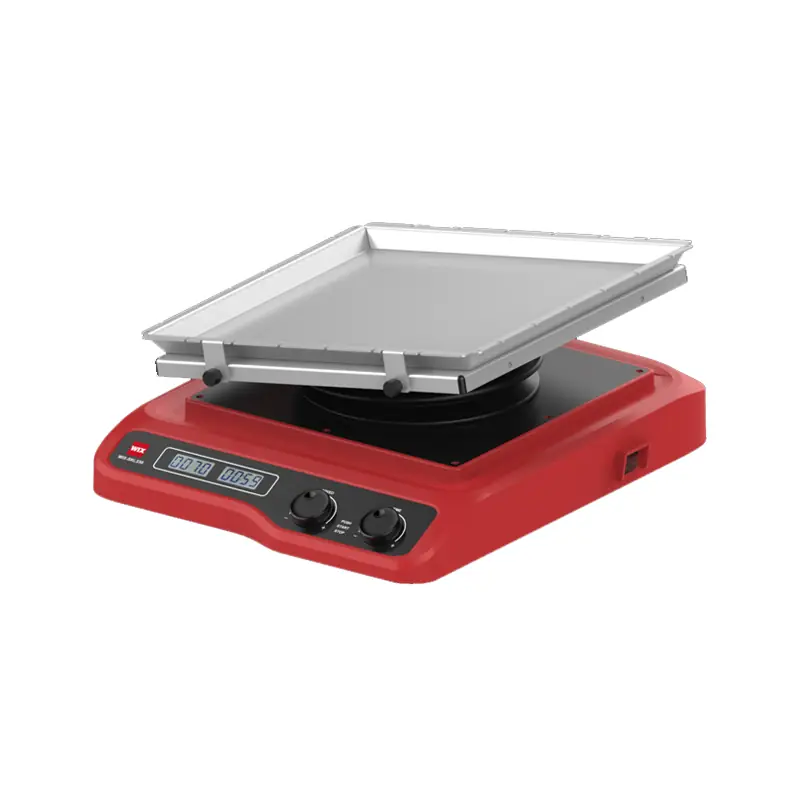
The 3D movement is relevant to procedures that require multidirectional tilting. Laboratories can compare this motion with their membrane washing, antibody incubation, or gel staining protocols to determine whether it matches the required agitation method.
The intended use should still be checked against the actual vessel and tray arrangement. A motion type alone does not confirm that a particular membrane holder or staining tray will fit.
The timed mode supports procedures with a defined running period, while continuous operation allows the process to continue until manually stopped. Separate LCD displays show speed and time independently, making the operating settings easier to read during routine use.
The timer range and speed range should be compared with the laboratory’s protocol. If a procedure requires a longer uninterrupted cycle, confirm the operating requirements with the supplier before purchase.
The stated maximum load includes fixtures. The combined weight of samples, containers, and holders must therefore remain within the published capacity. Laboratories should also confirm whether the rated load applies across the entire speed range.
The product information states that different brackets and fixtures are available. However, the exact accessory list and standard supply configuration should be confirmed in the quotation. Request the platform drawing and fixture dimensions if the laboratory uses specific trays or non-standard vessels.
WIX Technology Beijing Co., Ltd. was founded in 2015 and identifies laboratory equipment manufacturing, product development, global marketing, and technical consulting among its business activities.
When evaluating this shaker Company, focus on whether the supplier can confirm the details needed for the application: platform dimensions, fixture compatibility, load conditions, and the operating range under the intended setup. A quotation should clearly distinguish included accessories from optional items.
For importers and laboratory distributors comparing a China shaker, technical documentation is as important as the headline specifications. Check that the model number, electrical requirements, accessories, and packing details are consistent across the quotation and product documents. Confirm the destination market’s plug, voltage, and documentation requirements before placing an order.
Yes. The published operating modes include timed and continuous operation. The timer can be set from 1 minute to 19 hours and 59 minutes. For extended procedures, confirm the intended operating conditions with the supplier.
The product information states that different brackets and fixtures are available. The exact types, dimensions, and included accessories should be confirmed before ordering, especially when using non-standard trays or vessels.
No. The published maximum load includes fixtures. Calculate the combined weight of samples, containers, and all holders or clamps before comparing it with the rated capacity.
A 2D rocker generally tilts between two sides in a see-saw motion. A 3D shaker moves in multiple directions, creating a multidirectional tilting pattern. The correct type depends on the movement required by the experimental procedure.
Use the speed specified in the validated protocol whenever available. If no speed is given, begin with the laboratory’s established method or test a representative sample under controlled conditions. Confirm that the equipment supports the required speed with the actual operating load.
A suitable laboratory shaker should match the experimental movement, combined load, and vessel arrangement. A clear specification review can prevent problems such as incompatible fixtures, insufficient platform space, and operation beyond the rated capacity.
Before requesting a quotation, prepare the sample type, vessel dimensions, required platform arrangement, total operating load, expected running time, and destination country. If you are sourcing a 3D shaker for membrane washing, gel staining, or related laboratory procedures, contact WIX Technology Beijing Co., Ltd. with these details to discuss fixture compatibility, confirm the operating configuration, and request a quotation.