Do You Have Interest in Electrophoresis Tanks?
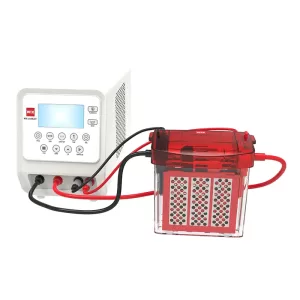
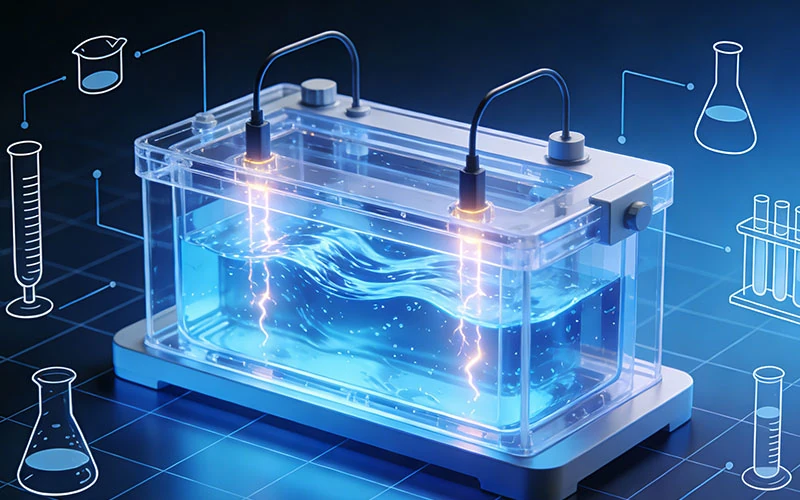
An electrophoresis tank is a core device used to hold electrophoresis buffer and samples in electrophoresis experiments. Its design and performance directly affect the accuracy and reproducibility

In the fast-paced world of life science research, time, accuracy, and sample integrity are everything. Whether you’re running PCR product verifications, restriction digests, or RNA analyses, horizontal electrophoresis remains a cornerstone technique in molecular biology labs. However, traditional setups often involve multiple standalone devices—an electrophoresis tank, a separate power supply, a UV transilluminator, and a gel documentation system—leading to fragmented workflows and increased risks of sample damage or user error.
Switching between different instruments not only slows down your experiment but also increases the chance of sample misidentification, misalignments, or prolonged exposure to harmful reagents or light sources. For labs processing dozens or even hundreds of samples daily, an integrated solution is no longer a luxury—it’s a necessity.
Horizontal electrophoresis uses an agarose gel submerged in a buffer solution, with an electric field applied across the gel. Negatively charged DNA or RNA molecules migrate toward the positive electrode, with smaller fragments moving faster than larger ones. This allows researchers to separate, identify, and purify nucleic acids based on size.
After separation, the DNA fragments must be visualized—typically using a fluorescent dye like ethidium bromide, SYBR Safe, or GelGreen, followed by excitation with ultraviolet (UV) or blue light. Accurate imaging is critical for downstream applications such as gel extraction, cloning, or sequencing.
UV light, especially at 254 nm, causes thymine dimers and other DNA lesions. For applications requiring recovery of DNA fragments (e.g., library preparation or subcloning), even brief UV exposure can significantly reduce transformation efficiency.
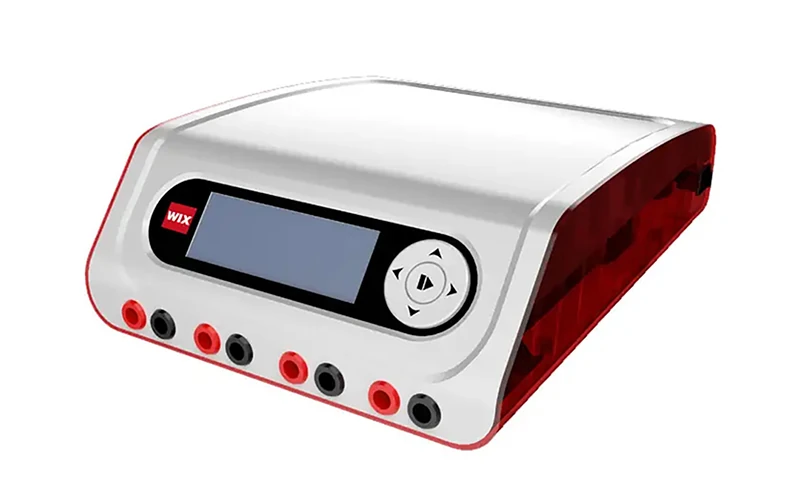
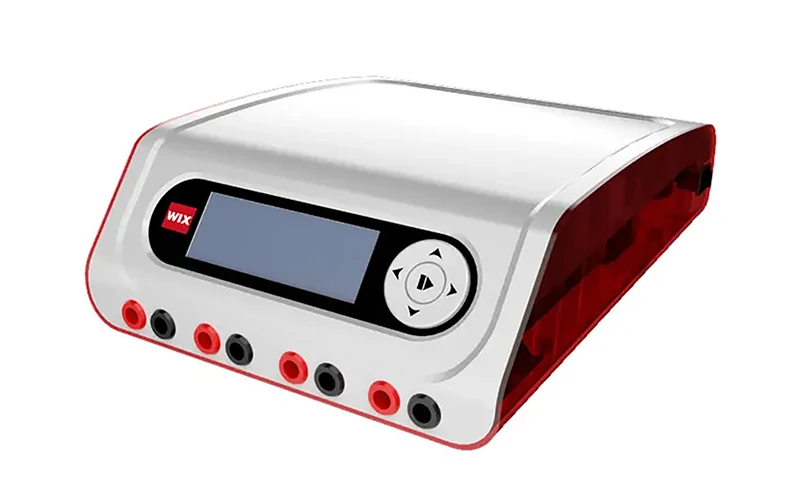
A typical workflow may require: setting up the gel in a tank, connecting an external Electrophoresis Power Supply, running the gel, carrying the gel to a UV transilluminator, capturing an image, then moving to a blue light cutting box for band excision. Each transfer adds minutes and risk.
Condensation is another common issue. When running electrophoresis at high currents or in humid environments, condensation often forms on the lid of the tank. This fogging distorts images and makes it difficult to see faint bands clearly—especially problematic when working with low-copy-number samples.
In addition, many traditional systems accommodate only 20–30 samples per run. For labs conducting high-throughput genotyping or PCR screening, this means multiple gel runs, increased hands-on time, and delayed results.
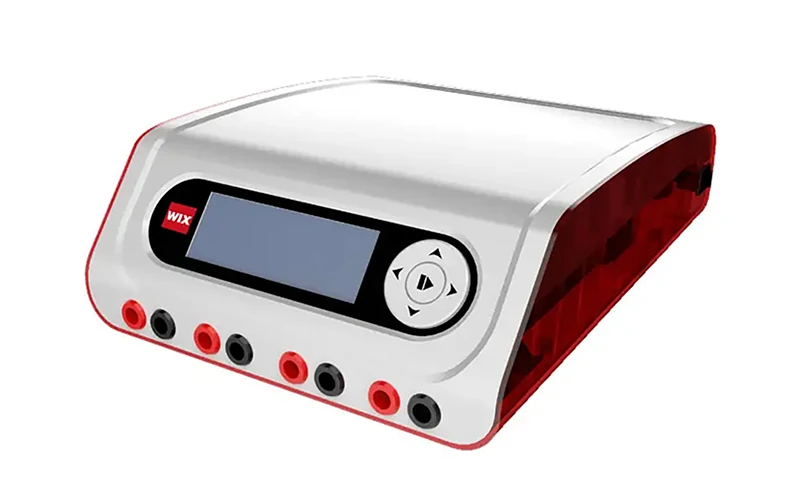
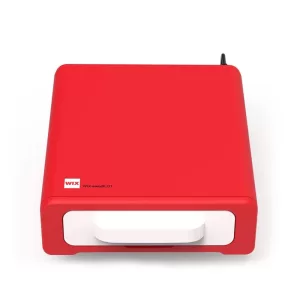
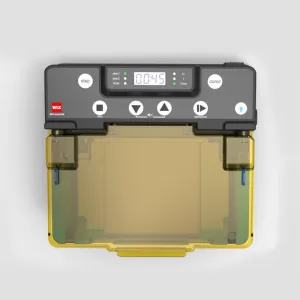
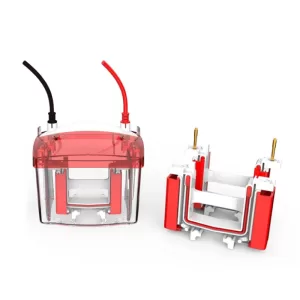
The Horizontal Blue Ray Electrophoresis System WIX-blueDNA is not just an electrophoresis tank. It is an all-in-one system that integrates a horizontal electrophoresis tank, a built-in power supply, a blue light transilluminator for gel cutting, and a blue light imaging base (camera not included). This design eliminates the need for separate equipment and streamlines the entire workflow—from gel running to sample recovery.
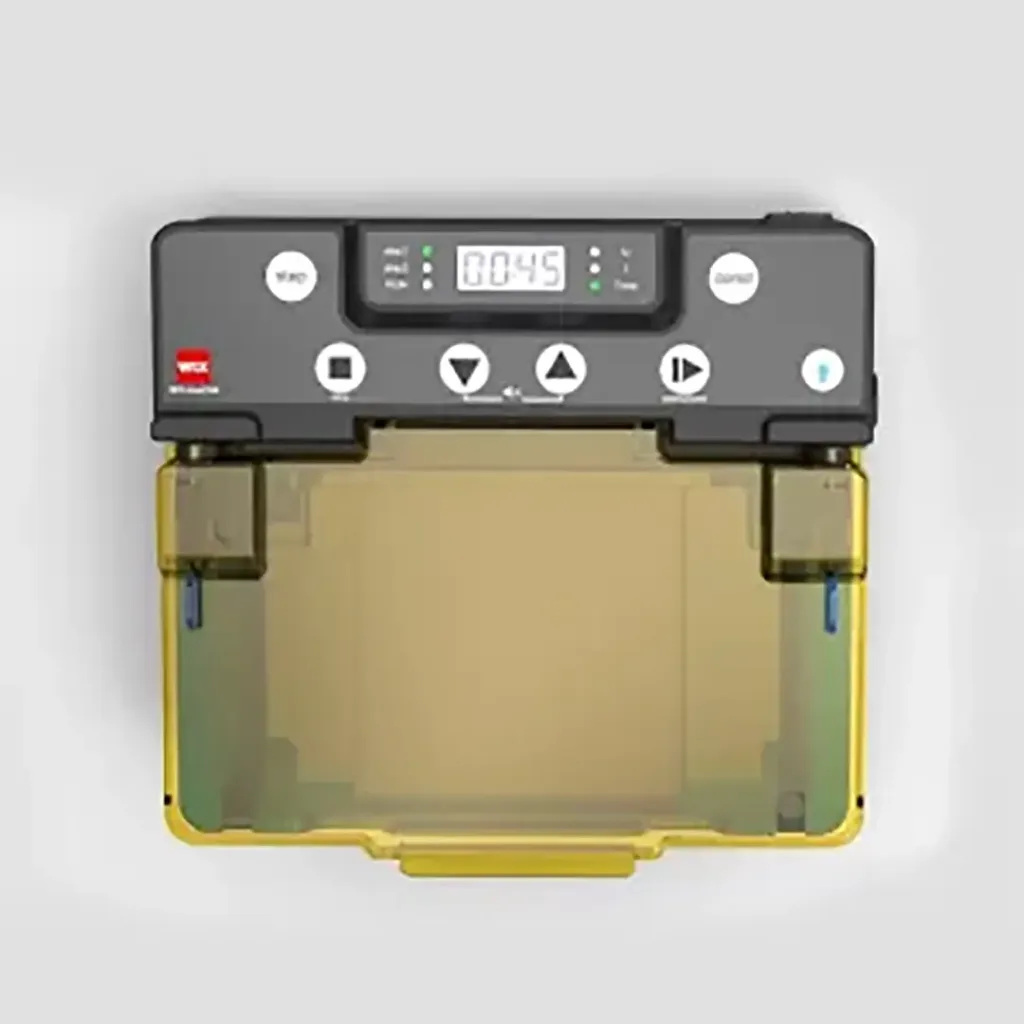
Unlike UV-based systems, the Horizontal Blue Ray Electrophoresis System WIX-blueDNA uses safe blue light (typically 470–490 nm) to excite fluorescent dyes. This DNA Electrophoresis imaging method causes no damage to nucleic acids, allowing you to cut out bands for cloning or sequencing without worrying about reduced yields or mutation risks.
You can run your gel, visualize bands directly on the built-in blue light plate, cut out target fragments using the blue illumination, and even capture images (using an external camera or smartphone)—all without moving the gel. The blue light intensity is adjustable across 3 levels, providing optimal contrast for faint or bright bands.
With comb configurations including 1mm 25 wells × 4 rows, the system allows you to run up to 100 samples (including markers) in a single gel. This is a game-changer for PCR product screening, genotyping, or educational labs with large class sizes.
The built-in power supply supports protein electrophoresis applications as well: you can set it once to run the spacer gel and separation gel automatically. With 5 programmable storage slots, you can recall frequently used protocols instantly.
Three intensity levels let you dial in the right illumination for different dye concentrations or gel thicknesses, improving image contrast and reducing background noise.
The gel tray is made of high-temperature-resistant material and withstands 100°C without deformation. You can pour freshly melted agarose directly into the tray—no need to wait for it to cool to 50–60°C. This saves 10–15 minutes per gel.
According to real-world usage data, customers of the Horizontal Blue Ray Electrophoresis System WIX-blueDNA fall into the following categories:
Schools of Life Sciences, Basic Medicine, Agriculture, and other university labs use the system for teaching and research, including cloning, genotyping, and RNA analysis. The high throughput and safe blue light imaging support diverse molecular biology applications.
Drug development, QC testing, and bioprocessing labs benefit from the high throughput and integrated workflow. The system allows rapid screening of nucleic acid samples while avoiding UV damage, which is critical for downstream cloning and sequencing.
Clinical labs in general hospitals (pathology, clinical laboratory departments) and third-party medical testing facilities use the system for PCR-based diagnostics. Fast, reliable DNA visualization helps shorten turnaround times for patient samples.
These include agriculture and food safety testing, forensic identification, and anti-doping agencies. In agriculture, the system supports GMO detection and pathogen screening. For forensic and anti-doping labs, the integrated blue light technology preserves DNA integrity from trace evidence, while the 100-sample capacity enables high-volume casework. The closed, multi-device design also minimizes cross-contamination risks during sample handling.
A: 120×120mm, 120×60mm, 60×120mm, 60×60mm.
A: SYBR Safe, GelGreen, SYBR Gold, and other green-absorbing dyes. Ethidium bromide also works but is less bright under blue light.
A: Up to 100 samples (including markers) using the 1mm 25-well × 4-row comb.
A: Yes. The integrated design, blue light safety (no UV hazard), and simple interface make it ideal for educational environments.
A: CE (IT1440WX08111806) and ISO 9001 (53123QZ0615R0S).
The Horizontal Blue Ray Electrophoresis System WIX-blueDNA represents a meaningful step forward in Electrophoresis technology for life science laboratories. By combining a running tank, power supply, blue light illuminator, and cutting base into one compact unit, it addresses the three biggest pain points in traditional DNA electrophoresis workflows: sample damage from UV light, inefficiency from multiple devices, and imaging errors caused by condensation.
With support for up to 100 samples, programmable voltage settings, heat-resistant gel trays, and CE/ISO certifications, this product is built for labs that value speed, safety, and data integrity. Whether you’re performing routine horizontal Electrophoresis for PCR screening or setting up a teaching lab for molecular biology, this integrated system offers a smarter, safer alternative to fragmented traditional setups.