Do You Have Interest in Electrophoresis Tanks?
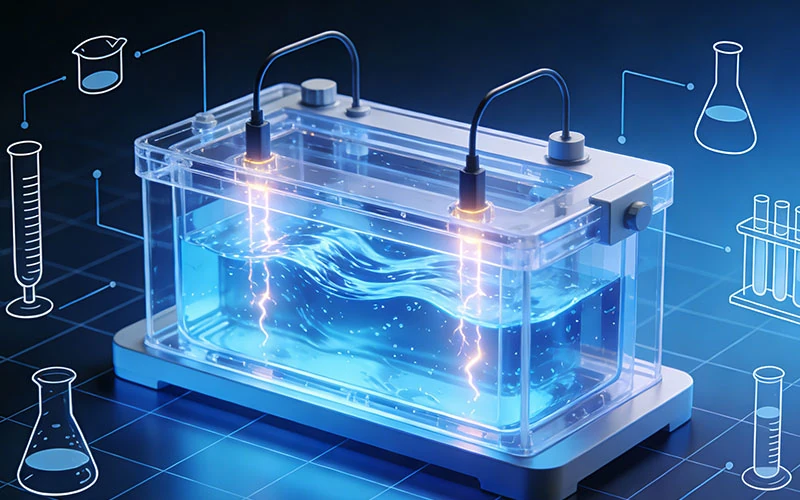
An electrophoresis tank is a core device used to hold electrophoresis buffer and samples in electrophoresis experiments. Its design and performance directly affect the accuracy and reproducibility

If you regularly run agarose gels, you’ve probably encountered at least one of these problems: a leaking electrophoresis tank, a warped gel tray, broken platinum wires, or a failed run caused by loading samples in the wrong direction. While these issues may seem minor, they can waste valuable samples, delay experiments, and affect the reproducibility of DNA analysis. In busy teaching laboratories, research institutes, and diagnostic facilities, even small equipment-related problems can quickly add up to significant downtime.
Many traditional horizontal electrophoresis still rely on designs that have changed very little over the years. As a result, laboratories often spend unnecessary time dealing with maintenance, setup errors, and consumable replacements.
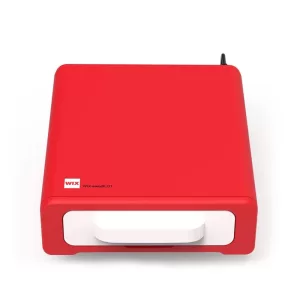
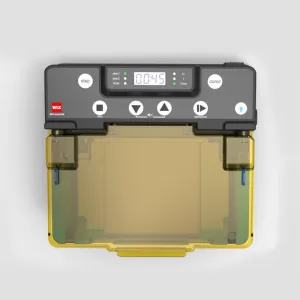
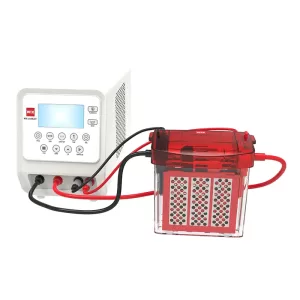
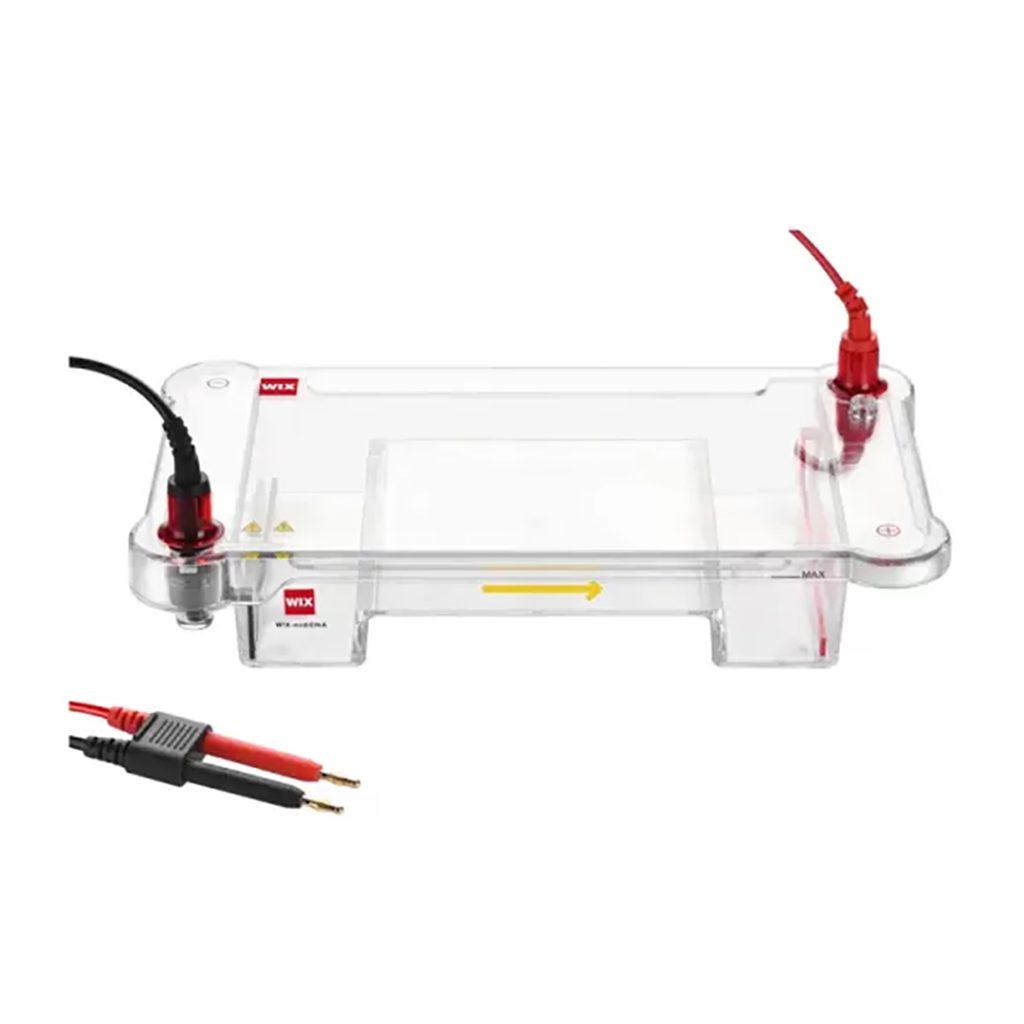
Modern horizontal electrophoresis systems have introduced several design improvements to address these challenges, including leak-free electrode assemblies, heat-resistant gel trays, and more durable platinum electrodes. The Horizontal Electrophoresis Cell WIX-miniDNA incorporates these improvements into a compact laboratory platform.
One of the most frequent complaints with older horizontal electrophoresis tanks is buffer leakage. Many traditional designs rely on rubber gaskets or O-rings to seal the electrode assembly. Over time, these rubber components harden, crack, or lose elasticity due to repeated exposure to running buffers and cleaning agents. Once a gasket fails, buffer slowly seeps out during the run, altering the voltage gradient and leading to uneven DNA migration. In severe cases, the tank may leak completely, aborting the experiment and wasting precious samples.
Replacing these rubber seals is often tedious and requires special tools. Laboratories end up spending time and money on maintenance instead of focusing on their research. Some users try to apply silicone sealant as a temporary fix, but that introduces contamination risks and rarely lasts.
Preparing an agarose gel seems straightforward, but traditional gel trays are not heat-tolerant. Standard trays usually comprise normal plastics that tend to deform when the temperature exceeds 60–70°C. Therefore, scientists need to wait until the heated agarose reaches about 55°C before pouring it into the tray. Waiting 10–15 minutes for every gel quickly accumulates into hours of wasted time when running multiple experiments weekly. Considering a laboratory conducting multiple experiments involving many gels each week, this delay becomes an important inefficiency factor.
Platinum wires are used in the process of electrophoresis because of their chemical inertness and high corrosion resistance. However, many low and intermediate-models employ fine platinum wire that is usually 0.16 mm thick. Over prolonged use, electrolysis and chloride ions in running buffer erode the thin wire, causing it to thin progressively or snap entirely. A broken platinum wire will distort the electric field, which may make the device stop operating. It is very costly to replace the electrodes; moreover, in certain lower models, it is impossible to replace them oneself, and the whole tank must be replaced.
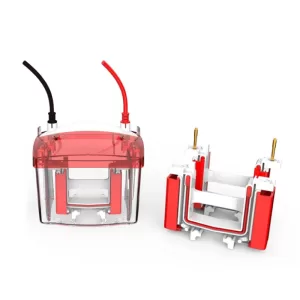
The Horizontal Electrophoresis Cell WIX-miniDNA eliminates rubber gaskets entirely. Its electrode assembly uses a snap-fit mechanism that creates a secure, watertight seal without any washers or O-rings. There are no aging rubber components to crack or degrade. This design not only prevents buffer leakage but also makes maintenance incredibly simple—the electrode module can be snapped in and out for cleaning or replacement in seconds.
The snap-fit construction also means there are no small parts to lose or misplace. For core facilities and teaching labs that run multiple electrophoresis cells daily, this reliability translates directly into less downtime and fewer experiment reruns.
Unlike standard plastic trays, theHorizontal Electrophoresis Cell WIX-miniDNA gel tray is made from a high-temperature-resistant material that remains perfectly flat even at 100°C. A fluorescent gauge is included for easy measurement, but the more significant advantage is the ability to pour molten agarose immediately after preparation—no cooling period required.
In practice: melt your agarose, swirl to mix, and pour directly into the tray. The gel solidifies evenly with no tray deformation. This design can help reduce waiting time during gel preparation by allowing molten agarose to be poured directly into the tray. For a lab running 20 gels per week, that translates to over 3 hours of recovered time each month.
The Horizontal Electrophoresis Cell WIX-miniDNA uses 99.99% pure platinum wire with a diameter of 0.25 mm—approximately 56% thicker than the 0.16 mm wire found in most conventional electrode systems. The increased cross-section improves resistance to corrosion and mechanical fatigue, maintaining a stable electric field consistently across hundreds of run cycles.
For labs running multiple gels daily, this durability translates directly into lower long-term costs. Rather than budgeting for annual electrode replacements, most users can expect years of reliable performance from the same set of electrodes.
Measuring only 260 × 110 × 80 mm and weighing just 0.6 kg, the Horizontal Electrophoresis Cell WIX-miniDNA occupies minimal bench space. Its lightweight construction makes it easy to move between stations or store in a drawer when not in use. The assembly is intuitive—no tools required.
The system supports two gel tray sizes: 70 × 70 mm and 70 × 100 mm. There are various kinds of combs that can be used depending on the requirements of experiments. There are three types of combs which vary in size (0.75 mm, 1.0 mm, 1.5 mm), each with 9 or 16 wells per comb. Combs of 0.75 mm are best suited for small sample load analysis, whereas the 1.5 mm combs will take large loads.
With two 16-well combs running simultaneously, the Horizontal Electrophoresis Cell WIX-miniDNA can process 32 samples at once—making it well suited for high-throughput screening applications such as colony PCR and restriction digest analysis. At this capacity, a full run of 32 samples can be completed in as little as 20 minutes.
This is made possible by the effectiveness of the electrode configuration used together with the proper buffer volume (260 mL), ensuring that the DNA fragment separations take place within 20 minutes. It is because of the consistency in the electric field that sharp bands are produced.
| Parameter | Specification |
| Gel Size | 70 × 70 mm / 70 × 100 mm |
| Sample Capacity | Up to 32 samples |
| Buffer Volume | 260 mL |
| Comb Thickness | 0.75 mm / 1.0 mm / 1.5 mm |
| Well Options | 9 wells or 16 wells per comb |
| Platinum Wire | 99.99% pure, 0.25 mm diameter |
| Dimensions (L×W×H) | 260 × 110 × 80 mm |
| Weight | 0.6 kg |
| Certifications | CE, ISO 9001 |
The Horizontal Electrophoresis Cell WIX-miniDNA is ideal for routine DNA analysis including:
When using gel isolation techniques, it becomes easier to isolate DNA fragments for cloning or sequencing with the aid of the 1.5 mm comb that enables a larger volume loading.
Teaching laboratories of universities gain from the robustness and reliability of the equipment. It means students have to focus more on electrophoresis theory and not machine troubleshooting.
It serves molecular biologists in gene expression, genetic engineering, and diagnostics.
WIX Technology manufactures the Horizontal Electrophoresis Cell WIX-miniDNA under ISO 9001:53123QZ0615R0S and the product carries CE certification (IT1440WX08111806) . These certifications demonstrate compliance with international quality and safety standards.
Customers consistently report that the unit delivers stable electrophoresis results with minimal batch-to-batch variation. The durable construction and long-life platinum wire reduce total cost of ownership.
WIX Technology provides product consultation, application guidance, and responsive after-sales service. Whether you need help selecting the right comb thickness or troubleshooting band smearing, the technical team is available.
For companies looking to private-label or distribute the Horizontal Electrophoresis Cell WIX-miniDNA, WIX Technology offers flexible OEM and distributor cooperation models. With years of experience serving global clients, they have built a reputation for reliable partnerships.
A: Leakage is often caused by worn rubber gaskets, damaged seals, or improper assembly. Over time, repeated exposure to buffers and cleaning solutions can reduce the effectiveness of sealing components. Regular inspection and maintenance can help prevent leaks.
A: It depends on the tray material. Standard plastic trays may deform at high temperatures, so agarose is often cooled before pouring. Heat-resistant trays can tolerate higher temperatures and allow faster gel preparation.
A: Platinum electrodes are highly durable, but they can become damaged through repeated use, accidental bending, or improper handling. Thinner platinum wires are generally more susceptible to breakage than thicker wires.
A: Smearing can result from overloaded samples, degraded DNA, incorrect agarose concentration, poor-quality buffer, or excessive running voltage. Checking sample quality and electrophoresis conditions is usually the first step in troubleshooting.
A: There is no fixed replacement schedule. Well-maintained platinum electrodes can last for years. Laboratories should inspect electrodes regularly and replace them only if they show signs of damage or reduced performance.
While leaks, gel tray deformation, and electrode failure are common issues in horizontal electrophoresis, they are often preventable through thoughtful equipment design and proper maintenance. Understanding the causes of these problems can help laboratories reduce downtime, improve reproducibility, and extend the service life of their electrophoresis systems.
The Horizontal Electrophoresis Cell WIX-miniDNA was designed with these challenges in mind. Its leak-free electrode assembly, heat-resistant gel tray, and reinforced platinum wire system work together to support consistent, reliable results across routine DNA electrophoresis workflows—so laboratories can spend less time on equipment issues and more time on the work that matters.