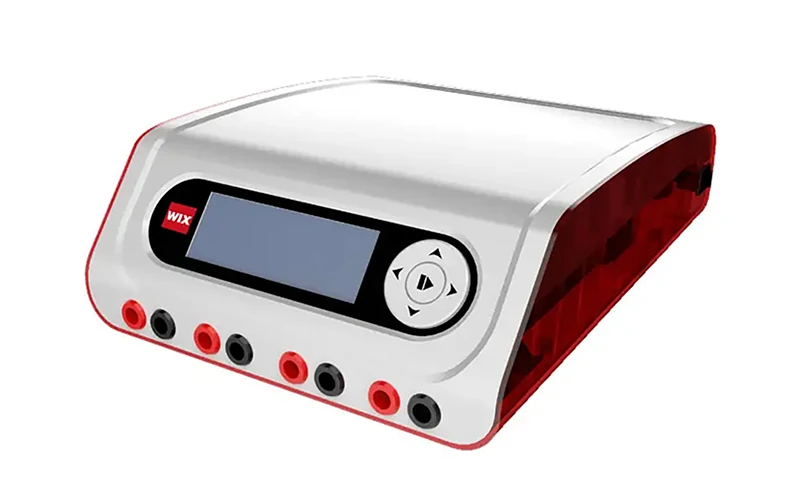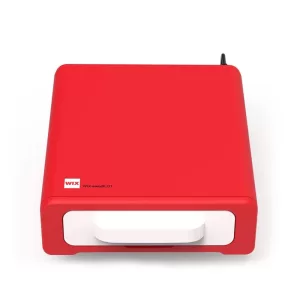
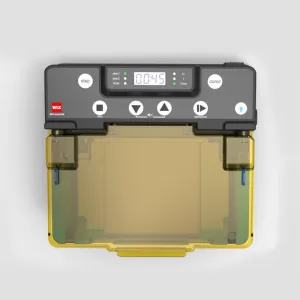
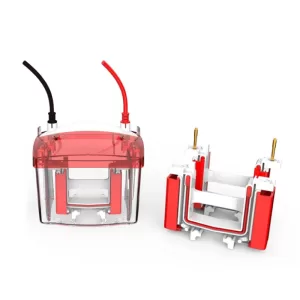
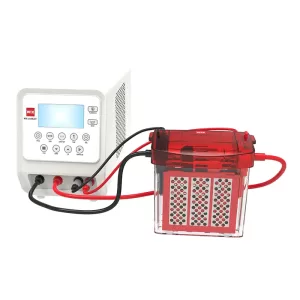
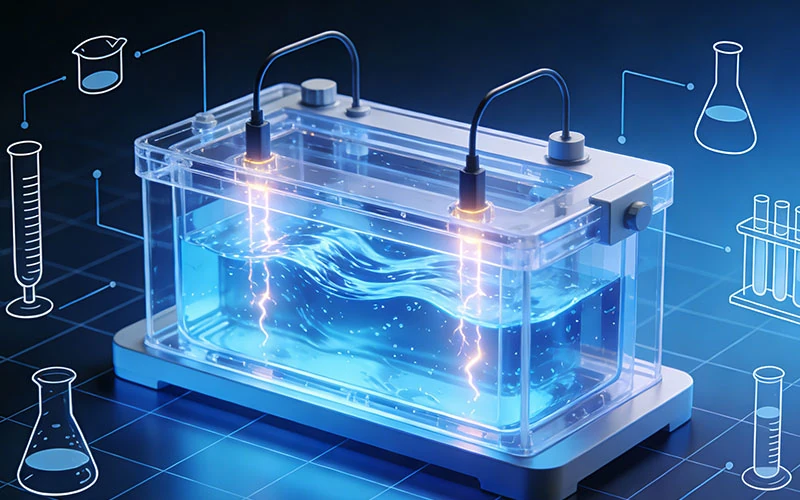
Do You Have Interest in Electrophoresis Tanks?
An electrophoresis tank is a core device used to hold electrophoresis buffer and samples in electrophoresis experiments. Its design and performance directly affect the accuracy and reproducibility

DNA electrophoresis is a routine technique in many molecular biology laboratories. It is commonly used to separate DNA fragments, verify PCR products, and assess whether the size of a DNA fragment matches the expected result. For these applications, the electrophoresis system needs to fit the laboratory’s gel format, sample volume, and daily workflow.
Choosing the right horizontal electrophoresis system is not simply about finding a chamber that can run a gel. Gel size, comb configuration, sample capacity, electrode design, and buffer requirements can all affect how conveniently an experiment can be set up and completed.
This guide explains the main factors to consider when choosing a horizontal electrophoresis system for DNA and PCR applications, from gel configuration and sample capacity to routine laboratory use.
A horizontal electrophoresis system is a laboratory device used to separate DNA and other charged molecules by applying an electric field to a gel. It is commonly used with agarose gels for DNA fragment separation.
In a typical DNA electrophoresis experiment, samples are loaded into wells in an agarose gel. DNA carries a negative charge, so it migrates toward the positive electrode when an electric field is applied. Smaller DNA fragments usually move through the gel faster than larger ones, which allows fragments of different sizes to be separated.
In a horizontal system, the gel is placed in a chamber filled with running buffer. The buffer carries the electric current through the gel during the run. The system therefore needs to provide stable electrical connections, enough buffer coverage, and convenient access for gel and sample loading.
Horizontal electrophoresis is widely used for routine DNA analysis, PCR product checking, cloning workflows, and other molecular biology applications. Choosing the right system can make these experiments easier to set up and more efficient to run.
Horizontal electrophoresis is widely used for DNA analysis because agarose gels provide a simple and effective way to separate DNA fragments across a wide size range.
By adjusting the agarose concentration, researchers can choose a gel that is better suited to the DNA fragment sizes they need to separate. Since both gel concentration and running conditions affect separation, gel selection and electrophoresis system selection should be considered together.
PCR product analysis is another common application. After PCR, researchers often run the products on an agarose gel to check whether the expected product is present and whether its band size matches the predicted fragment. A DNA ladder or molecular weight marker is usually run alongside the samples to help estimate fragment size.
For DNA and PCR applications, a horizontal electrophoresis system should therefore make sample loading straightforward, support the gel formats used in the laboratory, and provide enough capacity for the typical number of samples processed in each run.
When choosing a horizontal electrophoresis system, start with your experimental requirements rather than simply looking at overall size.
The key factors to consider include gel dimensions, well configuration, sample capacity, electrode design, buffer requirements, and the gel tray itself.
Gel size directly affects the available separation area and the number and arrangement of samples that can be accommodated.
A larger gel may provide more space for multiple samples or longer migration distances, while a smaller gel can be more convenient for routine experiments with fewer samples. The appropriate size depends on the number of samples, expected DNA fragment sizes, available laboratory space, and the intended workflow.
Flexible gel configurations can be particularly useful when the same electrophoresis system is used for different experiments. Instead of choosing a system based only on its maximum gel area, laboratories should consider whether the available gel sizes match their routine applications.
The comb determines the number, width, and approximate loading configuration of the wells. This makes comb selection an important consideration when a laboratory needs to process different numbers of DNA or PCR samples.
For a small experiment, a comb with fewer wells may provide sufficient capacity while allowing practical sample loading. For larger batches, a higher-well configuration can reduce the number of separate electrophoresis runs required.
Sample capacity should also be considered together with sample volume. A system that accommodates many wells is not automatically the best choice if the well dimensions do not match the laboratory’s sample-loading requirements.
Electrode quality and electrical connections are fundamental to electrophoresis performance. The system must provide a stable electrical path through the running buffer and gel while maintaining secure connections during operation.
Correct electrode orientation is also important. In horizontal DNA electrophoresis, samples should be positioned so that DNA migrates from the negative side toward the positive electrode. Laboratory protocols commonly use color-coded electrode connections to reduce the risk of incorrect setup.
When comparing systems, laboratories should therefore pay attention to how the electrodes are installed, how connections are maintained, and whether the design makes routine setup straightforward.
The running buffer provides the conductive medium through which the electric current passes. The gel needs to be adequately covered by buffer during a conventional submerged horizontal electrophoresis run.
Both insufficient and excessive buffer can affect the experiment. Manufacturer guidance for horizontal systems notes that insufficient buffer can allow the gel to dry, while excessive buffer can influence DNA migration.
For this reason, buffer capacity should be evaluated together with the gel dimensions and the laboratory’s normal operating procedure.
The gel tray is another practical consideration, particularly in laboratories that prepare agarose gels directly on the tray.
A suitable tray should maintain its shape during routine gel preparation and electrophoresis. Its transparency can also make it easier to inspect the gel and wells during setup.
For laboratories that frequently cast their own gels, the tray’s temperature resistance and dimensional stability can be especially relevant when selecting an electrophoresis system.
Electrophoresis requirements vary widely between laboratories. A research group running a few PCR samples is unlikely to need the same configuration as a laboratory processing dozens of samples at a time.
For routine DNA fragment separation, a suitable system should offer an appropriate gel size, convenient sample loading, stable electrode connections, and straightforward operation.
It should also fit the laboratory’s standard agarose gel preparation and running protocols. If most experiments involve only a small number of samples, a much larger or more complex system is rarely necessary.
PCR product analysis typically requires consistent sample loading and enough separation to distinguish the expected product from nonspecific bands or primer dimers.
When selecting equipment for PCR workflows, the number of PCR reactions normally processed in one batch should be considered. The comb configuration and available well positions should accommodate the expected number of samples while leaving space for DNA markers or controls.
For laboratories processing large numbers of DNA samples, sample capacity and workflow flexibility are especially important.
A higher-capacity gel configuration can reduce the number of separate runs needed for a batch. However, capacity alone is not enough. Well configuration, gel dimensions, sample loading convenience, and the availability of different gel formats also matter.
This is particularly relevant for research institutes, biotechnology laboratories, agricultural testing labs, food-safety laboratories, and other facilities that process DNA samples as part of routine testing or screening workflows.
For laboratories that need flexible gel configurations and high sample capacity for DNA and PCR-related electrophoresis, the Horizontal Electrophoresis Cell WIX-midiDNA is designed to support these requirements.
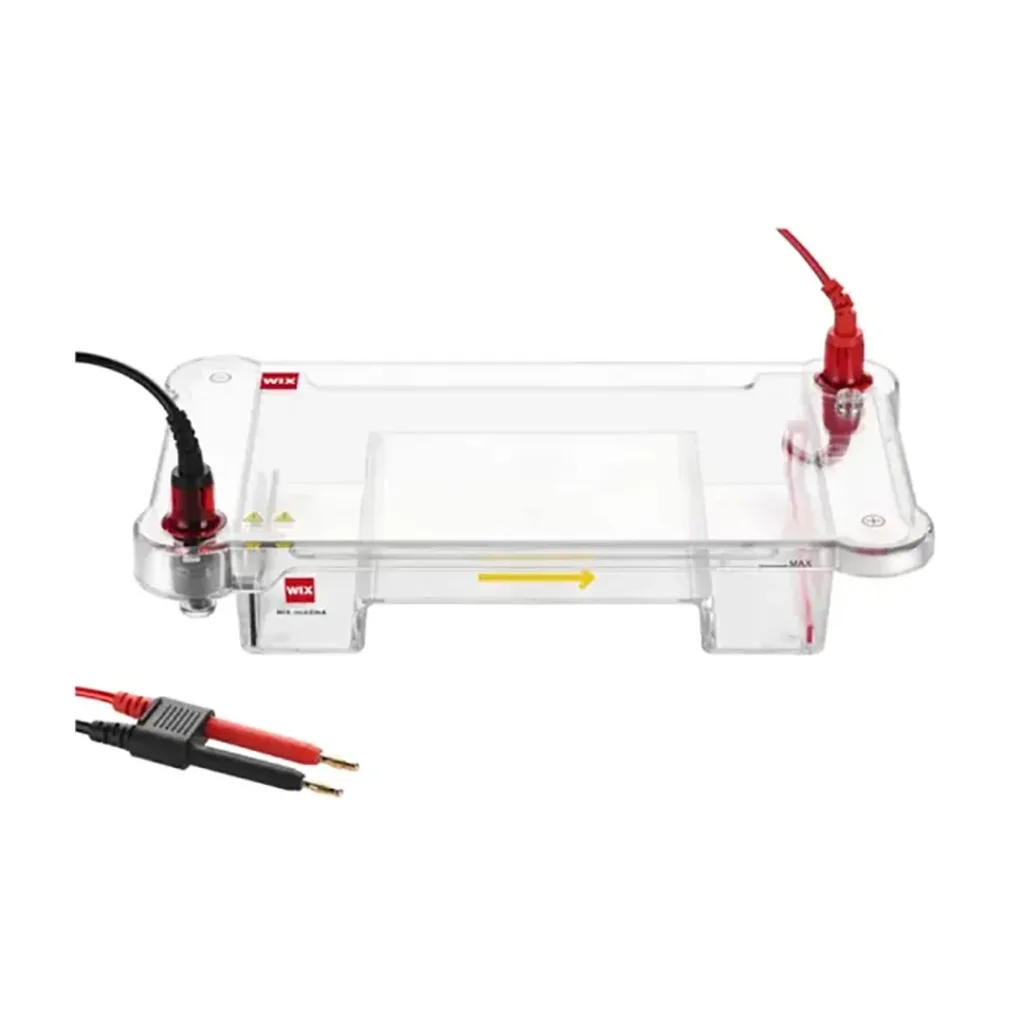
The system supports four gel area configurations:
This range allows laboratories to select a suitable gel format according to the number of samples and the requirements of a particular experiment.
The Horizontal Electrophoresis Cell WIX-midiDNA supports multiple comb configurations for different sample-loading requirements.
For 0.75 mm combs, available configurations include 7 + 7 wells / 14 wells and 9 + 9 wells / 19 wells. A 1.0 mm comb provides a 12 + 12 wells / 27 wells configuration. The system also supports 1.5 mm comb configurations of 14 and 19 wells, while 2.0 mm combs are available in 3 + 2 wells and 3 + 3 wells configurations.
The product information also specifies support for 8-channel and 12-channel sample addition, providing flexibility for laboratories using different sample-loading workflows.
For PCR and DNA electrophoresis workflows involving many samples, sample capacity can be an important consideration.
The Horizontal Electrophoresis Cell WIX-midiDNA is specified for separation and analysis of up to 108 samples, including the marker, using a four-row configuration with 27 wells per row. According to the provided product information, the system can separate and analyze up to 108 samples within 20 minutes.
This high sample capacity can be useful when laboratories need to process larger batches of DNA samples without repeatedly setting up separate gels.
The electrode assembly of the Horizontal Electrophoresis Cell WIX-midiDNA uses a snap-fit design rather than traditional plastic screw tightening. According to the product specifications, this design is intended to avoid leakage associated with aging rubber gaskets in conventional screw-tightened structures.
The system also uses silkscreen markings to indicate the electrophoresis direction, helping users identify the correct electrode orientation during setup.
The electrode uses 0.25 mm, 99.99% platinum wire. Its diameter is 56% larger than that of ordinary electrophoresis platinum wire.
The Horizontal Electrophoresis Cell WIX-midiDNA uses a heat-resistant gel tray designed to withstand temperatures up to 100°C without deformation, according to the supplied specifications.
This feature is intended to simplify agarose gel preparation because the gel can be cast without waiting for the agarose solution to cool to a lower temperature. The accessories are manufactured using integral injection molding, with the product information describing them as transparent and designed for longer service life.
The unit has a 1000 mL buffer capacity and measures 300 × 170 × 80 mm (L × W × H), with a listed weight of 1.1 kg.
Regular maintenance helps keep an electrophoresis system reliable over repeated use.
After each use, the chamber, gel tray, combs, and other removable parts should be cleaned according to the manufacturer’s instructions. Any residual agarose, buffer, or staining reagent should be removed from the surfaces, especially around electrical connections.
The electrode assembly should be inspected regularly for visible damage, contamination, corrosion, loose connections, or other abnormalities before each run.
Electrical connections should be handled carefully. The power supply must be turned off before opening the chamber or changing any connections.
For laboratories that run electrophoresis frequently, routine cleaning and inspection can help maintain consistent operation and extend the service life of the equipment.
A: A horizontal electrophoresis system is commonly used for nucleic acid separation with agarose gels. Typical applications include DNA fragment separation, PCR product analysis, cloning workflows, and other molecular biology applications.
A: Sample capacity depends on the gel size and comb configuration. Different systems can support different numbers of wells. The WIX-midiDNA, for example, is specified for up to 108 samples, including the marker, when using its high-capacity configuration.
A: Yes. Agarose gel electrophoresis is commonly used to analyze PCR products. A DNA ladder or molecular weight marker can be included to help estimate the size of the amplified fragments.
Choosing a horizontal electrophoresis system should be based on the laboratory’s actual DNA and PCR workflow rather than on a single specification. Gel size, comb configuration, sample capacity, electrode design, buffer requirements, and gel tray characteristics can all influence how conveniently the system fits into routine laboratory work.
For laboratories performing DNA fragment separation and PCR product analysis, a flexible DNA electrophoresis system can provide practical advantages when different sample numbers and gel configurations need to be accommodated. A system such as Horizontal Electrophoresis Cell WIX-midiDNA, with multiple gel sizes, multiple comb configurations, and a specified capacity of up to 108 samples, is designed to address these types of workflow requirements. Contact WIX TECHNOLOGY to learn more about the Horizontal Electrophoresis Cell WIX-midiDNA.